Peptides in Skincare: The Complete Guide (2026)
Peptides are everywhere in 2026 skincare, but most don't work. Here's the honest breakdown of which peptides actually deliver, and the products that get.
Heads up: this post has affiliate links. We may earn a small commission if you buy something, at no extra cost to you. We only link to stuff we'd actually tell a friend about. Prices shown are approximate and change often; check the retailer for current pricing.
Peptides are short chains of amino acids that signal specific cellular actions in skin. The proven ones with real clinical data: Matrixyl 3000 (collagen), copper peptides/GHK-Cu (healing + collagen), argireline (expression lines), and TriHex Technology (Alastin’s proprietary tripeptide). The ones that don’t work well topically: DNA fragments, most “bioregulators,” and claims-heavy peptide blends with no identified active. Here’s the honest guide to what to buy.
Peptides are the most misunderstood ingredient in 2026 skincare. Every product claims them. Most are underdosed or use weak variants. Here’s which ones actually work, what they do, and the best products.
What peptides actually are
Peptides are chains of 2-50 amino acids, smaller than proteins but functional biological signals. In skincare, they mimic fragments of natural skin proteins (like collagen), triggering specific cellular responses: making more collagen, reducing muscle contraction, transporting minerals, or repairing damage.
Peptide categories in skincare:
- Signal peptides: tell cells to make something (usually collagen)
- Carrier peptides: deliver trace minerals
- Neurotransmitter peptides: reduce muscle contraction (expression lines)
- Enzyme-inhibiting peptides: slow collagen breakdown
The peptides that actually work
1. Matrixyl 3000 (palmitoyl tripeptide-1 + palmitoyl tetrapeptide-7)
Matrixyl 3000 is a blend of two peptides that signals fibroblasts to produce more collagen III and elastin. It’s the most-studied topical peptide for anti-aging. Clinical trials show visible wrinkle reduction at 0.2-5% concentration over 8-12 weeks.
Real evidence: Multiple peer-reviewed studies. Established collagen stimulation mechanism. Present in many credible anti-aging products.
2. Copper peptides (GHK-Cu, copper tripeptide-1)
GHK-Cu is a three-amino-acid peptide (glycyl-histidyl-lysine) bound to copper. It stimulates collagen production, accelerates wound healing, and supports skin remodeling. The most-studied peptide in skincare with 40+ years of research.
Real evidence: Decades of research. Strong collagen and healing data. Distinct blue color in formulations (copper).
3. Argireline (acetyl hexapeptide-8)
Argireline partially inhibits the SNARE protein complex involved in muscle contraction, it’s sometimes called “topical Botox,” though the effect is far milder. Clinical trials show 10-30% reduction in expression line depth with consistent use over 3-6 months.
Real evidence: Multiple studies showing modest but real wrinkle depth reduction. Best for forehead and crow’s feet expression lines. Much weaker than actual Botox, but it’s topical, not injected.
4. TriHex Technology (Alastin proprietary)
TriHex is Alastin’s patented tripeptide + hexapeptide combination designed to clear old/damaged collagen and elastin fragments and stimulate production of fresh versions. Unique in its dual-action mechanism. Strong clinical and pre/post-procedure data.
Real evidence: Published research in ex vivo skin models. Widely used in derm offices for pre/post-procedure protocols.
The peptides that are mostly hype
- Polynucleotides (salmon DNA) in topical form: DNA fragments don’t penetrate skin. Injectable version works; topical doesn’t.
- “Stem cell peptides”: usually plant extracts with aspirational marketing. Plant stem cells don’t behave like human stem cells.
- “Exosome peptides”: exosomes aren’t peptides. Cross-marketed but different categories.
- Generic “peptide complex” on labels: if no specific peptide is named, assume weak dose
- Russian-origin bioregulators (Epithalon, Thymalin, etc.): very limited non-Russian clinical evidence
The peptide product hierarchy (by evidence + efficacy)
Tier 1: Premium peptide serums with strongest data
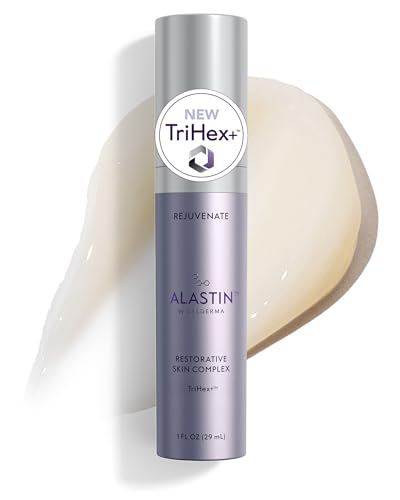
Alastin
Restorative Skin Complex
TriHex Technology, the peptide complex with best clinical data.
Best for: 30-45, early aging, post-procedure

SkinMedica
TNS Advanced+ Serum
Dual-chamber growth factor + peptide serum.
Best for: 40+, comprehensive anti-aging
Tier 2: Mid-tier peptide serums worth the price

1% pure GHK-Cu in two-phase formula.
Best for: Copper peptide concentration, experienced users

Drunk Elephant
Protini Polypeptide Cream, 15 ml
Signal peptides + amino acids + growth factors in moisturizer.
Best for: 25-40, fragrance-free peptide moisturizer
Tier 3: Budget peptide options that actually work

Naturium
Multi-Peptide Moisturizer
Multiple signal peptides + copper peptide.
Best for: Budget buyers, peptide newcomers

The Ordinary
Buffet + Copper Peptides 1%
Multi-peptide + copper peptide serum.
Best for: Layering serum, mixing with other routines

Paula's Choice
Peptide Booster
Concentrated peptide serum for layering.
Best for: Active-skincare users, layerers
How to use peptides
Peptides are stable, play well with most other actives, and can be used morning or night. Apply after cleansing/toning, before moisturizer. Don’t use same-routine with acids or strong exfoliants, pH shifts can degrade peptides. Pair well with hyaluronic acid, niacinamide, and retinoids (alternate nights).
Routine integration:
- Cleanser
- Toner (optional)
- Vitamin C (morning) or tretinoin (night)
- Peptide serum (wait 10-15 min if after retinoid)
- Moisturizer
- SPF (morning)
What to avoid:
- Don’t layer peptides with low-pH acids (AHA/BHA) in same routine
- Don’t use copper peptides with high-dose vitamin C (can interact)
- Don’t expect immediate results: 8-12 weeks for visible change
Peptide timeline expectations
- Weeks 0-4: No visible change; cellular work beginning
- Weeks 4-8: Subtle smoothness improvements
- Weeks 8-12: Visible texture and tone improvement; fine lines softened
- Months 3-6: Full effect; maintain with continued use
- Beyond 6 months: Maintenance phase; diminishing returns past this point
The honest verdict
Peptides are legitimate anti-aging ingredients when you pick the right ones. Matrixyl 3000, copper peptides (GHK-Cu), argireline, and Alastin’s TriHex have real data. Most other “peptide” marketing is vague. For maximum impact, pair a peptide serum with a retinoid, they work through different mechanisms and stack well.
Premium Beauty
Premium peptide and growth factor picks
Clinical-grade products we recommend.
CurrentBody
Under $500LED Light Therapy Face Mask Series 3
750 LEDs and 6 wavelengths, chosen in the MyDose app.
Buy on Amazon →Dr. Dennis Gross
Under $500DRx SpectraLite FaceWare Pro
Rigid shell. 100 red + 62 blue LEDs. Sephora's bestseller.
Buy on Amazon →Omnilux
Under $500Men LED Face Mask
Omnilux's in-stock flexible LED face mask (the Contour Face is out of stock on Amazon).
Buy on Amazon →Therabody
Under $500TheraFace PRO
Microcurrent, red light and percussive therapy in one handheld. Replaces three single-purpose gadgets.
Buy on Amazon →Therabody
Under $500TheraFace PRO
Red light + microcurrent + percussive + cleansing. Sci-fi gadget.
Buy on Amazon →Augustinus Bader
Under $500The Cream
TFC8 tech. The one celebrities keep talking about.
Buy on Amazon →Frequently asked
Are peptides better than retinol? +
No, they're complementary. Retinol drives cell turnover; peptides signal collagen production. Use both for full effect.
How do peptides compare to exosomes? +
Peptides penetrate skin and work topically. Exosomes mostly don't, they work best applied after microneedling. Peptides win for at-home routines.
Are copper peptides safe? +
Yes, at cosmetic concentrations. Long-established safety record over 40+ years.
Do peptide eye creams work? +
Yes, especially for fine lines and crepiness. Argireline-containing eye creams reduce expression lines most reliably.
Can I use multiple peptide products? +
Yes. You can stack a peptide serum + peptide moisturizer without issue. The main cost is budget, not compatibility.
Are peptides pregnancy safe? +
Yes, most are. Peptides are generally OB-approved. Double-check specific products for retinoid or salicylic acid contamination if you're cautious.
Keep reading
All articles →tretinoin
Bioregulators in Skincare: What They Are, What to Buy (2026)
Bioregulators (short peptides derived from organ extracts) are the new Russian anti-aging trend. Here's what the research actually shows.
tretinoin
Exosomes vs Peptides in Skincare: What Actually Works in 2026
Exosomes are the hot new anti-aging ingredient. But do they beat peptides? Here's the honest breakdown of exosomes vs peptides, mechanism, evidence.
tretinoin
What Is Resveratrol in Skincare? Complete Guide
Resveratrol is the red-wine antioxidant that's become a premium anti-aging ingredient. Here's the honest guide on what it does and the best products.
Premium Beauty
More Premium Beauty picks
If money isn't the object, these are our Premium Beauty favorites.
CurrentBody
Under $500LED Light Therapy Face Mask Series 3
750 LEDs and 6 wavelengths, chosen in the MyDose app.
Buy on Amazon →Dr. Dennis Gross
Under $500DRx SpectraLite FaceWare Pro
Rigid shell. 100 red + 62 blue LEDs. Sephora's bestseller.
Buy on Amazon →Omnilux
Under $500Men LED Face Mask
Omnilux's in-stock flexible LED face mask (the Contour Face is out of stock on Amazon).
Buy on Amazon →Therabody
Under $500TheraFace PRO
Microcurrent, red light and percussive therapy in one handheld. Replaces three single-purpose gadgets.
Buy on Amazon →Therabody
Under $500TheraFace PRO
Red light + microcurrent + percussive + cleansing. Sci-fi gadget.
Buy on Amazon →Augustinus Bader
Under $500The Cream
TFC8 tech. The one celebrities keep talking about.
Buy on Amazon →